Loading

EqualTales

Back to Work

EqualTales

An AI-powered children's storybook generator featuring real women from history—built for a hackathon with a mission.

Industry EdTech / Social Impact
Role Designer & Developer
Year 2026 (#75HER Hackathon)
Platform Web
Problem
Help close the STEM gender gap; most children's books feature male protagonists.
My role
Designer & Developer. Took it from concept to deployed product.
Outcome
1st Place - Best AI/ML at #75HER Hackathon; 200+ Demo attendees.
Timeline
2026 (#75HER Hackathon)
EqualTales case study hero image - An AI-powered children's storybook generator featuring real women from history—built for a hackathon with a mission.
1st Place - Best AI/ML at #75HER Hackathon
200+ Demo attendees

Key Decisions

Real women over fictional role models

  • Generic fictional role models

Chosen: Real historical women as protagonists

Fictional role models felt hollow; real achievements create deeper emotional impact than fiction.

Trade-off Real historical figures limit story variety.
Watercolor over photorealistic illustration

  • Photorealistic image style
  • Unique generated characters per story

Chosen: Watercolor illustration style

Photorealism hit uncanny valley and per-story faces were inconsistent; watercolor is forgiving of AI inconsistencies.

Try EqualTales
claude-code
$ |
This is how it starts. A question, a prompt, and curiosity.

The Challenge

A hackathon challenge with a mission: create something that helps close the gender gap in STEM.

Research shows that representation matters. Girls who see women in STEM are more likely to pursue those careers themselves.

The Question

Can AI create meaningful children's content that challenges stereotypes and inspires young girls to see themselves as scientists, engineers, and leaders?

My Contributions

Research
historical figures researched
50+
user personas developed
5
competitor analysis
5
Design
story screens designed
12
character templates
6
illustration style guide
1
Development
AI models integrated
2
deployed MVP
1

How I Made an Impact

Identifying the Gap

Recognized that most children's books feature male protagonists. Girls need to see themselves as scientists, engineers, and leaders—not just princesses.

Choosing Authenticity

Used real historical women like Marie Curie and Mae Jemison instead of fictional characters. Real stories create real impact.

Visual Consistency

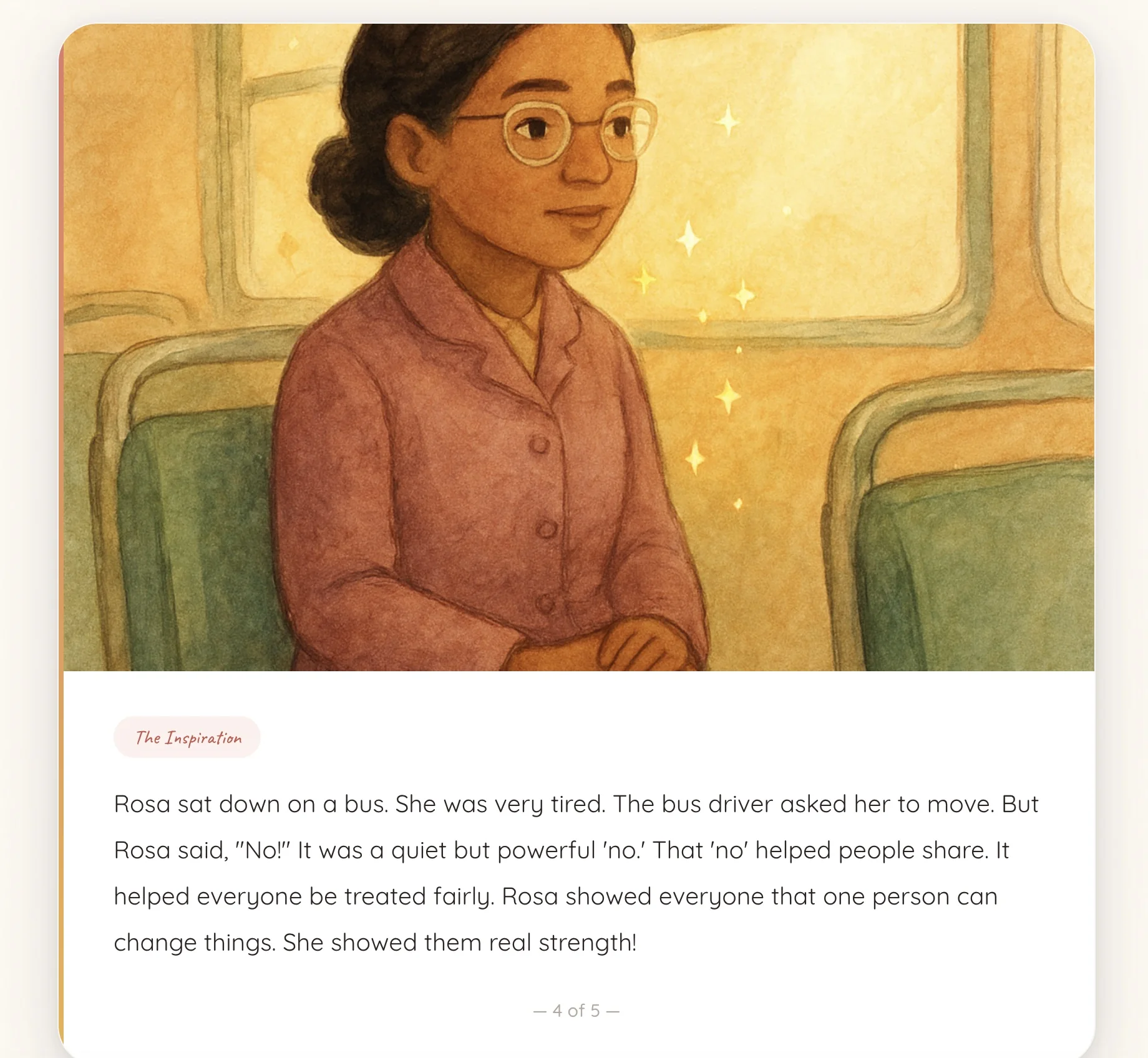
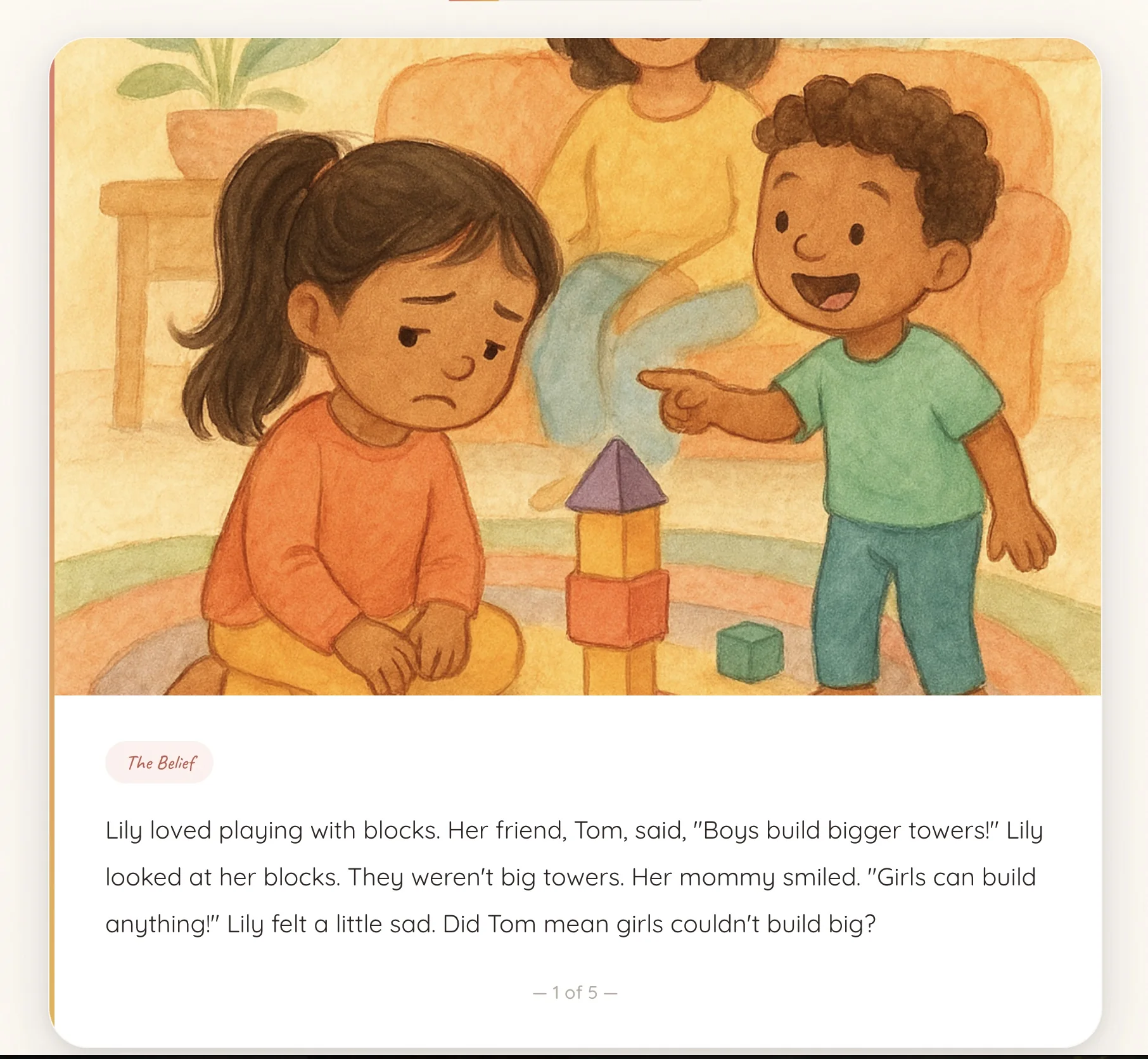
Developed a watercolor illustration style that creates cohesive, warm visuals across all generated images—solving the AI inconsistency problem.

Personal Connection

Wove the child's name directly into the narrative, transforming a generic story into a personal adventure.

The Product

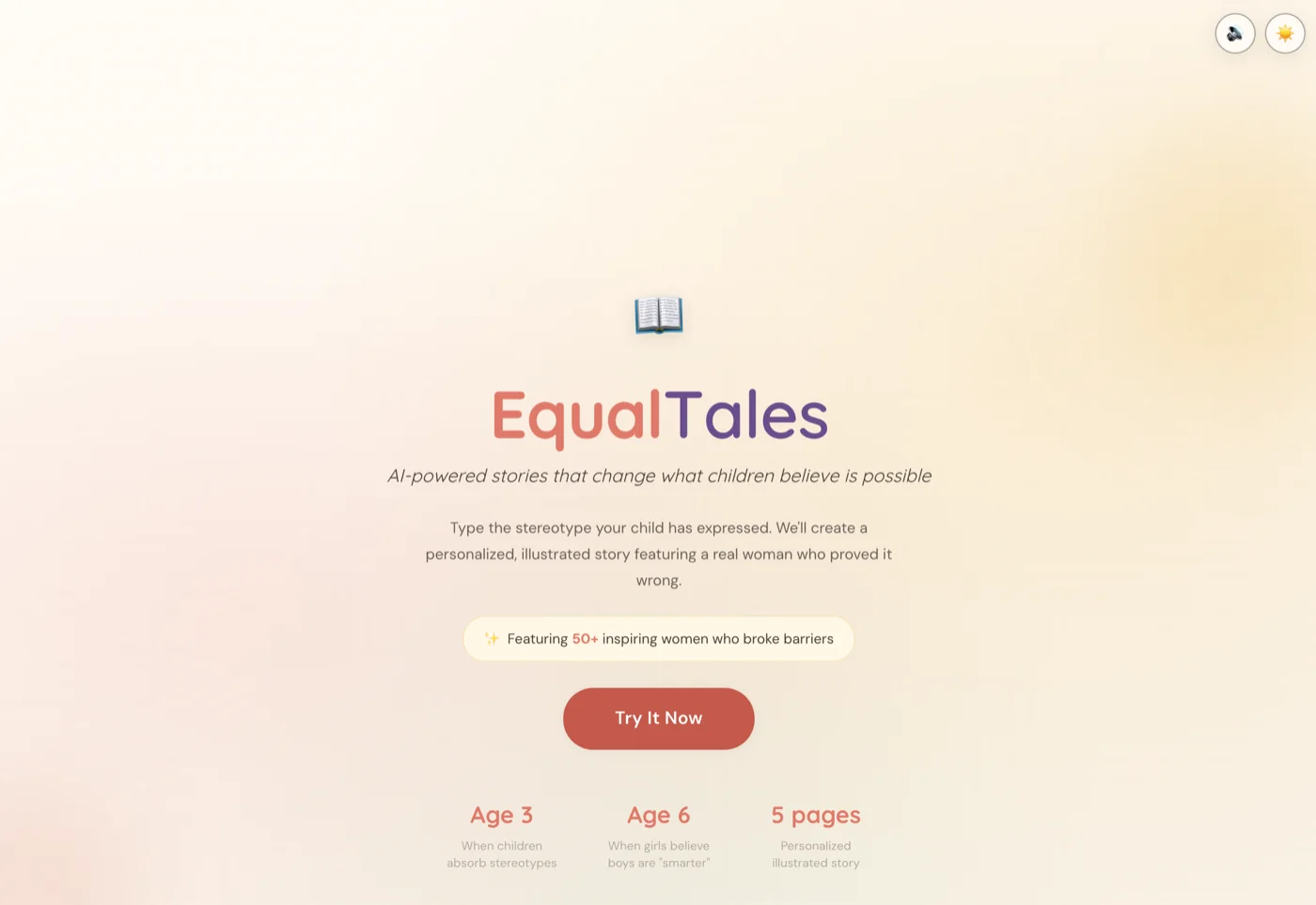
EqualTales landing page - AI-powered stories that change what children believe is possible
Fig. 1 Landing Page
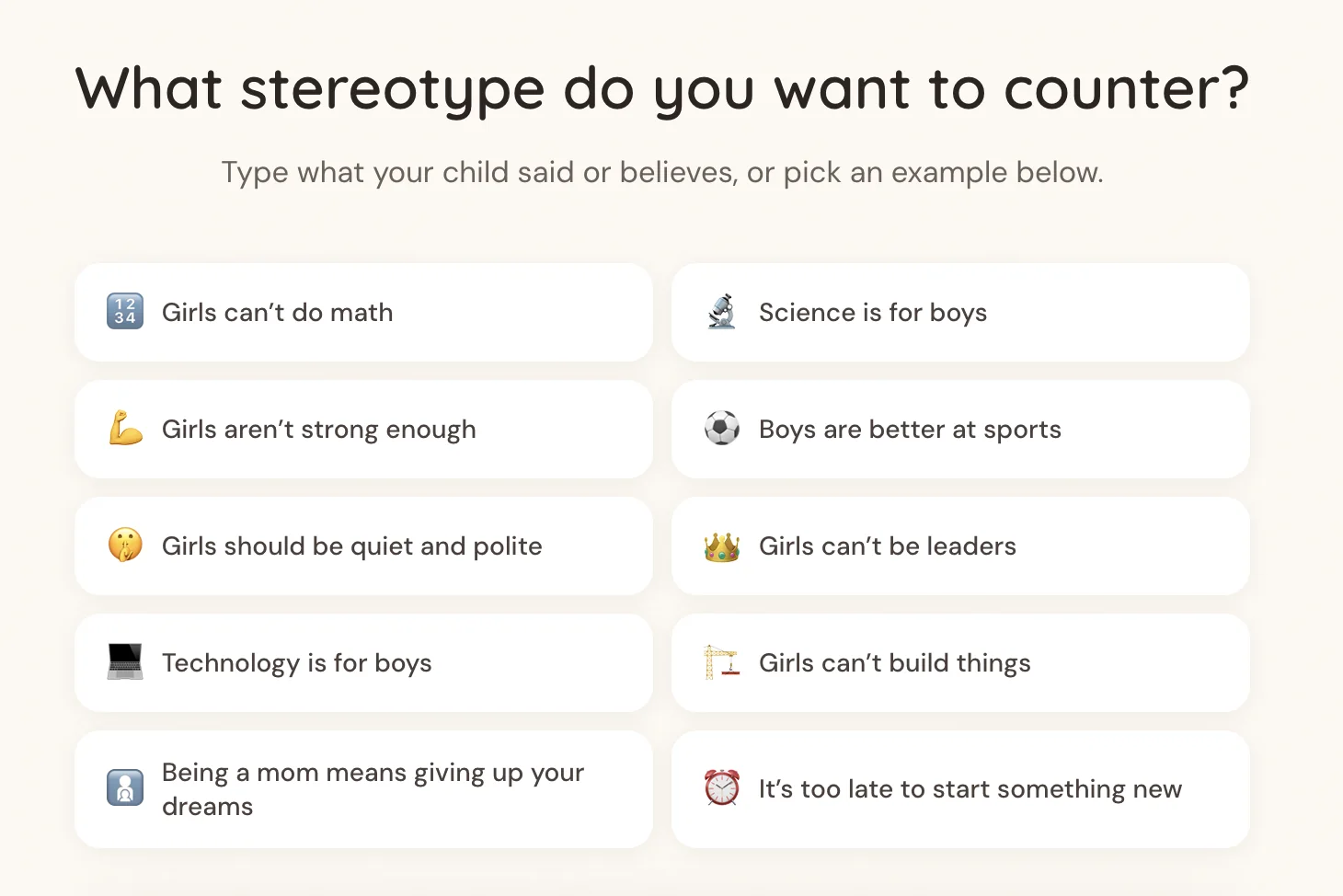
Stereotype selection screen - Type the stereotype your child has expressed
Fig. 2 Stereotype Input
Historical figure selection - Real women who broke barriers
Fig. 3 Historical Figures
AI-generated personalized story with watercolor illustrations
Fig. 4 Generated Story

Design Evolution

Building with AI requires iteration. Here's what I learned through trial and error:

What I Tried That Didn't Work

  • Generating unique characters per story—faces were inconsistent across pages
  • Using photorealistic image style—uncanny valley effect
  • Generic fictional role models—felt hollow without authenticity

What Actually Worked

  • Real historical women (Marie Curie, Mae Jemison) for instant authenticity
  • Watercolor illustration style for cohesive, warm visuals
  • Child's name woven into narrative for emotional connection

Visual Direction

The watercolor illustration style was a deliberate choice to solve AI's consistency problem while creating warm, inviting visuals.

Art Style

Watercolor

Soft, warm, forgiving of AI inconsistencies

Palette

Purple, coral, gold on warm cream

Characters

Historical

Real women, real stories

Key Trade-off

What I chose

Chose authenticity over flexibility—real historical figures limit story variety but create deeper emotional impact.

By anchoring stories to real historical figures, we limited the variety of narratives we could tell. But the authenticity of real women's achievements—Marie Curie discovering radium, Mae Jemison traveling to space—creates a deeper emotional impact than any fictional character could.

Outcome

Recognition

Best AI/ML — #75HER Hackathon

Impact

Demo'd to 200+ attendees

The judges recognized that EqualTales wasn't just a technical achievement—it was a meaningful application of AI to address a real social challenge.

What This Shows About Me

This project demonstrates my ability to combine design thinking, AI tools, and social impact into a cohesive product under extreme time pressure.

Mission-Driven Design

I'm drawn to projects with real-world impact. Closing the STEM gender gap isn't just a hackathon theme—it's a problem worth solving.

Rapid Prototyping

I took EqualTales from concept to a deployed product for the hackathon. Speed enables experimentation and learning.

AI-Native Thinking

I understand how to leverage AI tools effectively—knowing when to prompt, iterate, and make trade-offs for the best outcome.

Try EqualTales